Key Takeaways
- Solar shingles integrate energy production directly into roofing materials for a seamless appearance, though they demand higher initial investments.
- Traditional solar panels provide superior efficiency and accelerate return on investment, particularly benefiting larger households with substantial energy demands.
- Selection between shingles and panels hinges on current roof integrity, available incentives, and extended energy objectives.
Highlights
- Aesthetic Integration: Solar shingles replicate conventional roofing for an unobtrusive profile, whereas panels mount atop existing surfaces.
- Efficiency Levels: Panels achieve 18 to 22 percent conversion rates, surpassing the 14 to 18 percent typical of shingles.
- Cost Breakdown: Expect $20 to $35 per square foot for installed shingles, compared to $2.50 to $3.50 per watt for panels.
- Durability Expectations: Both options endure 25 years or more under routine maintenance, yet panels facilitate simpler individual replacements or upgrades.
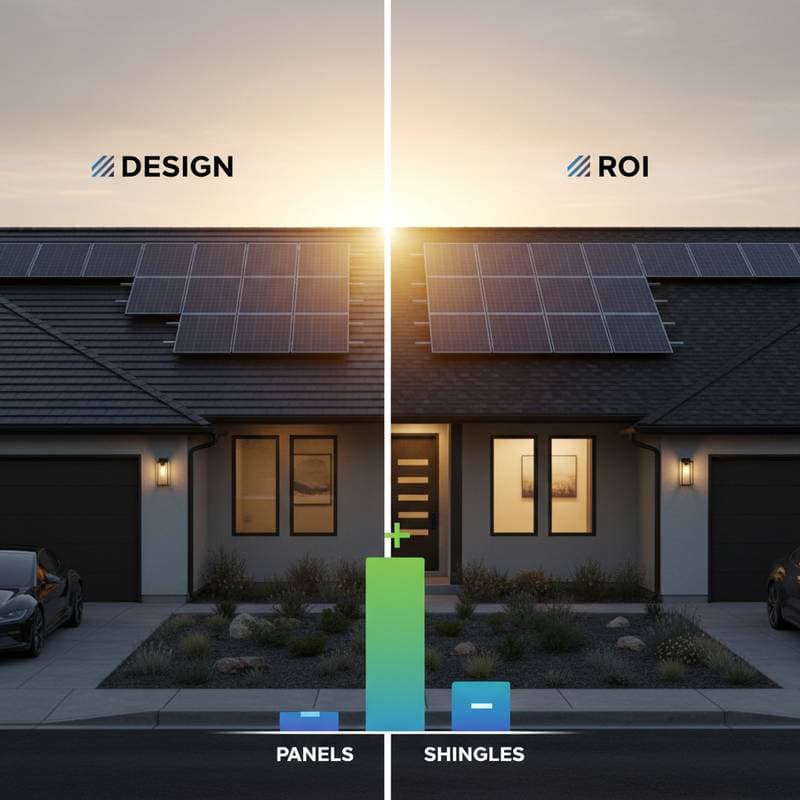
- ROI Projections: Panels recoup costs within 6 to 10 years, while shingles extend this to 10 to 15 years owing to elevated starting expenses.
Understanding Solar Panels
Solar panels represent established rooftop installations secured via racks over current roofing. These systems dominate the market due to their high performance, economic viability, and established track record. Available in diverse wattages and finishes, such as monochromatic black frames, they minimize visual disruption while supporting easy scalability for expanding family needs or shifting power requirements.
From a design standpoint, panels adapt to virtually any architectural style and permit precise angling for peak sunlight capture. Homeowners frequently pair them with dark metal or composite roofing to achieve a cohesive, efficient exterior that blends form with function.
Evaluating ROI: Panels Versus Shingles
Traditional solar panels yield a superior return on investment for the majority of homeowners, particularly in regions with elevated electricity tariffs or constrained roof areas. Their enhanced sunlight conversion offsets greater portions of utility expenses per unit area. Coupled with reduced setup costs and widespread access to components and technicians, panels achieve payback in 6 to 10 years, influenced by consumption patterns and regional rebates.
Solar shingles prolong this recovery to 10 to 15 years, stemming from premium pricing and marginally reduced output. In upscale neighborhoods or during new builds, however, shingles elevate property appeal by merging advanced features with refined visuals. This synergy of innovation and style appeals to purchasers prioritizing environmental integration as a core aspect of living standards.
Consider a complete roof overhaul alongside aesthetic priorities; shingles then align with budgetary logic. For intact roofs and prompt financial gains, panels emerge as the prudent choice.
Installation and Maintenance Comparisons
Panels install and maintain with greater simplicity than shingles, which necessitate expert coordination and meticulous preparation.
Installation Processes
- For Panels: Secure mounting brackets to roof rafters, attach panels, integrate inverters, and connect to the home's electrical grid.
- For Shingles: Layer units akin to traditional shingles, embed wiring under the decking, and ensure comprehensive sealing against elements.
Shingle projects extend timelines as roofing specialists and electrical professionals synchronize efforts. When coinciding with a necessary roof renewal, this process streamlines operations. Retrofitting shingles onto aged roofs, by contrast, escalates labor expenditures.
Ongoing Maintenance and Repairs
Individual panel components detach readily for servicing or substitution. Shingles, embedded within the structure, demand extensive intervention for issues; a faulty segment might require reworking adjacent areas. Such intricacies potentially increase upkeep expenses, offset by the polished, integrated finish.
Trends in Solar Shingle Adoption
Solar shingles experience rising interest, contingent on evolving design preferences and construction volumes.
These products appeal in contemporary and bespoke developments, where owners equate visual harmony with operational efficacy. They align with prevailing styles emphasizing uninterrupted roof profiles, reduced visible fixtures, and embedded innovations.
Advancements in photovoltaic cells and material hues enhance shingle viability, attracting those previously deterred by panel aesthetics. Panels, nonetheless, retain market leadership through cost advantages and adaptability.
Frequently Asked Questions
1. Do solar shingles require unique maintenance?
Solar shingles demand minimal attention, such as periodic surface cleaning, yet troubleshooting proves more involved than for panels. Engage certified professionals versed in integrated roofing technologies.
2. Is installation feasible on an existing roof?
Shingles suit new constructions or total replacements optimally. Overlaying them on legacy roofs inflates expenses and risks warranty invalidation.
3. Remain solar panels viable amid declining prices?
Affirmative. Technological progress accompanies ascending energy rates, ensuring panels deliver enduring cost reductions. Their accessible entry price sustains competitiveness against market fluctuations.
4. How to assess roof compatibility for solar?
Seek roofs with limited obstructions and southern or western orientations for maximum exposure. Consult experts to evaluate structural soundness, pitch, and available space.
5. Is combining shingles and panels possible?
Indeed. Property owners often blend systems, deploying shingles in prominent zones and panels in concealed spots to harmonize appearance and output.
Selecting and Sustaining Your Solar Investment
Approach solar decisions by auditing your home's energy profile, roof status, and visual aspirations. Panels suit efficiency-driven scenarios, delivering rapid fiscal relief. Shingles cater to holistic upgrades, enhancing allure alongside sustainability.
Post-installation, monitor performance via utility tracking and annual inspections to safeguard longevity. This proactive stance secures optimal yields, fortifying your home against rising costs while contributing to broader environmental aims.