Key Takeaways
- Early detection of structural weaknesses prevents deck collapses and ensures family safety.
- Common issues include wood deterioration, fastener corrosion, and foundation instability.
- Routine inspections combined with basic repairs extend deck longevity and reduce long-term costs.
1. Does the Wood Show Signs of Rot or Softness?
Soft, spongy, or discolored wood indicates the onset of rot, which compromises structural integrity. Rot typically develops in areas where moisture accumulates, such as near railing posts, stair supports, or beneath potted plants. Probe suspect areas with a screwdriver; if the wood yields easily or crumbles, immediate action is required. Even pressure-treated wood degrades if water pools and debris builds up over time.
Highlights:
- Examine spaces beneath deck boards and around attachment points.
- Prioritize shaded regions that retain moisture longer.
- Remove and replace sections with advanced decay to halt further spread.
2. Are Railings Loose or Unstable?
Wobbly railings pose a significant fall risk and often stem from weakened connections or deteriorated balusters. Test stability by applying firm pressure to posts and horizontal rails; any excessive movement signals underlying problems. Inspect brackets and bolts for wear, as these secure the railing system to the deck frame.
Loose components can result from weathering or impact damage. Tighten fasteners where possible, but replace corroded parts to restore reliability.
Highlights:
- Check all vertical balusters for gaps exceeding code standards.
- Focus on high-traffic areas near edges.
- Secure replacements with corrosion-resistant hardware for durability.
3. Do Deck Boards Sag or Bounce When Stepped On?
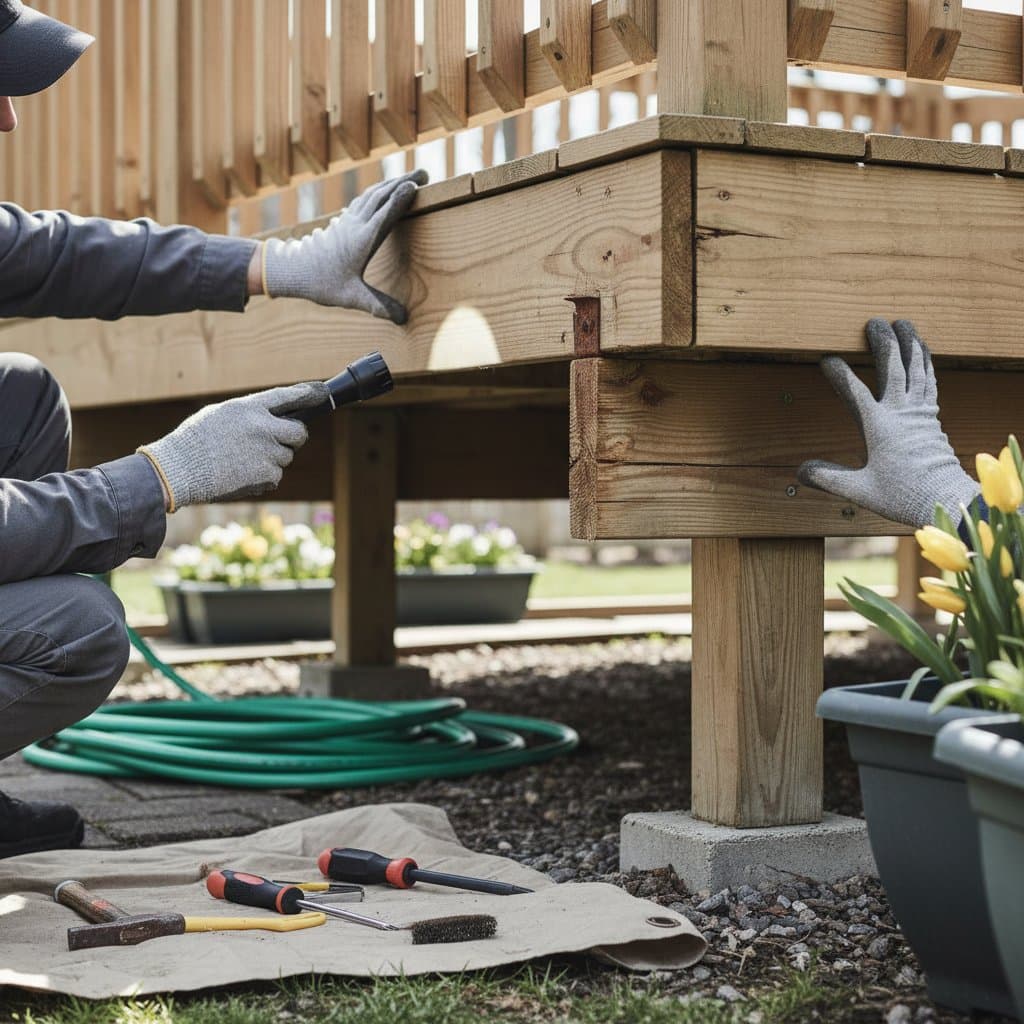
A springy or uneven surface underfoot points to compromised joists or detached boards. As wood ages, it shrinks and pulls away from supports, loosening nails and creating instability. Access the underside to assess joist condition, looking for fractures, rust on metal hangers, or absent fasteners.
Sagging often accelerates in high-use zones. Address it by securing boards with screws designed for outdoor exposure, which accommodate seasonal expansion and contraction.
Highlights:
- Undersized or rotting joists frequently cause pronounced dips.
- Entry points and stair-adjacent boards endure heavier wear.
- Reinforce affected areas promptly to prevent progressive weakening.
4. Is Hardware Rusted or Corroded?
Rusted nails, screws, or brackets weaken the entire assembly by allowing movement and further exposure to elements. Corrosion thrives in humid environments or where salt air accelerates oxidation. Visually scan all visible fasteners and concealed connectors for reddish-brown buildup or pitting.
Replace deteriorated hardware immediately, as it undermines load distribution. Opt for galvanized or stainless steel alternatives that withstand outdoor conditions.
Highlights:
- Inspect ledger attachments and joist hangers closely.
- Coastal or rainy climates demand more frequent checks.
- Proper installation prevents moisture trapping around metal.
5. Have Posts or Footings Begun to Shift?
Leaning posts or fractured concrete footings indicate an unstable foundation, often due to soil erosion or freeze-thaw effects. Posts misaligned with their bases reduce weight-bearing capacity. Examine the ground around footings for heaving or gaps, and verify that connectors remain intact.
Measure deck levelness at multiple locations; discrepancies greater than one inch suggest corrective measures. Stabilize shifts to avoid stress propagation throughout the structure.
Highlights:
- Frost-prone regions experience more footing upheaval.
- Poor drainage exacerbates soil movement.
- Professional leveling may be necessary for severe cases.
6. Is the Ledger Board Separating from the House?
Gaps between the ledger board and house siding reveal moisture infiltration and potential detachment risks. The ledger anchors the deck to the home; any separation invites water damage to both structures. Probe the joint for softness and check flashing for proper installation to divert runoff.
Small separations might require re-securing with lag screws, but extensive damage often necessitates partial disassembly. Ensure waterproofing during repairs to prevent recurrence.
Highlights:
- Inadequate flashing is a primary cause of ledger failure.
- Inspect annually, especially after heavy rains.
- Consult building codes for secure attachment methods.
7. Are Stairs Wobbly or Uneven?
Unstable stairs contribute to many injuries, arising from cracked stringers or poorly fastened treads. Moisture at ground level hastens decay in lower components. Test for movement by stepping firmly; level treads and solid attachments are essential for safe navigation.
The soil contact point demands extra scrutiny. Install concrete footings or additional bracing to elevate and protect vulnerable areas.
Highlights:
- Stringers often split from repetitive stress.
- Treads should align precisely without gaps.
- Use deck-specific screws for superior long-term hold.
8. Does the Deck Exhibit Overall Instability?
General swaying or creaking during use warns of systemic issues across multiple supports. This symptom combines elements from other signs, such as widespread rot or loose framing. Perform a full load test by gathering several people in one area; unnatural flexing indicates overload vulnerability.
Holistic assessments reveal interconnected problems. Strengthen the frame comprehensively if instability persists after addressing isolated faults.
Highlights:
- Older decks over 15 years require thorough evaluations.
- Vibration from wind or footsteps amplifies weaknesses.
- Load-bearing capacity must match intended usage.
Assessing Repair Feasibility
When several indicators surface or core elements like beams and ledgers sustain damage, reconstruction may prove more prudent than patching. Engage a structural engineer for an objective evaluation to determine if reinforcements suffice or if full replacement offers better value.
Repair vs. Replacement Guide
| Condition | Repair Viable | Replacement Advised |
|---|---|---|
| Isolated surface rot | Yes | No |
| Solely loose railings | Yes | No |
| Ledger detachment | Sometimes | Frequently |
| Post displacement | Sometimes | Frequently |
| Numerous joist breaks | No | Yes |
Spring Deck Maintenance Routine
- Clear the surface by sweeping and pressure-washing to reveal hidden flaws.
- Evaluate railings, posts, and stairs for any play or misalignment.
- Inspect the understructure for corroded elements or fractured supports.
- Remove accumulated debris from board gaps to promote airflow.
- Seal treated surfaces with a quality repellent after completing fixes.
Adopt this sequence annually to identify and mitigate issues early.
Common Deck Safety Questions
When should a professional handle the inspection?
For decks exceeding 10 years in age or displaying various alerts, expert assessment uncovers subtle threats beyond visual checks.
What is the ideal frequency for resealing?
Apply sealant every two to three years under normal conditions. Regions with intense sunlight or precipitation may require annual applications.
Is spot replacement sufficient, or does the entire deck need overhaul?
Individual board swaps work if the framework remains robust. Compromised joists or posts demand broader interventions.
Which fasteners offer the best endurance?
Stainless steel or hot-dipped galvanized screws outperform others in corrosion resistance. Steer clear of untreated steel nails prone to rapid rusting.
Secure Your Deck for Seasonal Enjoyment
Proactive inspections transform potential hazards into manageable tasks, safeguarding your outdoor haven. Implement these strategies to foster a resilient structure that withstands spring's demands and beyond.