Spring Roof Inspections: Selecting Between Drone Assessments and Professional Expertise
Home renovation expenses in the United States continue to rise, driven by increasing prices for roofing materials and reduced contractor availability. As a homeowner with experience in multiple roof repairs, the most effective strategy to control costs involves early detection of problems. A spring roof inspection becomes essential in this context. The key decision centers on whether to conduct the inspection using a personal drone or to engage a licensed roofing professional.
Initial attempts at drone inspections reveal challenges such as wind interference, limited battery duration, and suboptimal camera positioning. While drones provide valuable assistance, they do not always deliver a comprehensive solution. When applied appropriately, however, drones serve as an efficient tool for proactive roof maintenance.
The Importance of Spring Roof Inspections
Spring weather introduces temperature fluctuations that reveal vulnerabilities from winter freeze-thaw effects. Shingles may curl, flashing can detach, and gutters might separate due to accumulated ice loads. Neglecting a spring inspection allows small cracks to develop into leaks during summer rains.
Experienced timing for inspections occurs shortly after the initial warm periods, when materials expand and expose damage. Drone imaging excels in this phase by providing rapid aerial views without the need for ladders. The choice between DIY and professional methods hinges on accuracy, safety, and cost-effectiveness.
Decision Framework: DIY Drone Versus Professional Inspection
Evaluate your roof's slope, height, and design complexity when choosing an approach.
DIY Drone Inspections Suit Situations Where:
- The roof features a single story or gentle pitch.
- A dependable drone is already available.
- A swift visual review follows recent storms.
- Confidence exists in analyzing images for signs of wear, debris, or unsecured flashing.
Professional Inspections Are Recommended When:
- The roof presents steep angles or multiple levels.
- Evidence of leaks, sagging, or apparent damage appears.
- Home warranties or insurance policies demand certified reports.
- Interpretation of visual data feels uncertain.
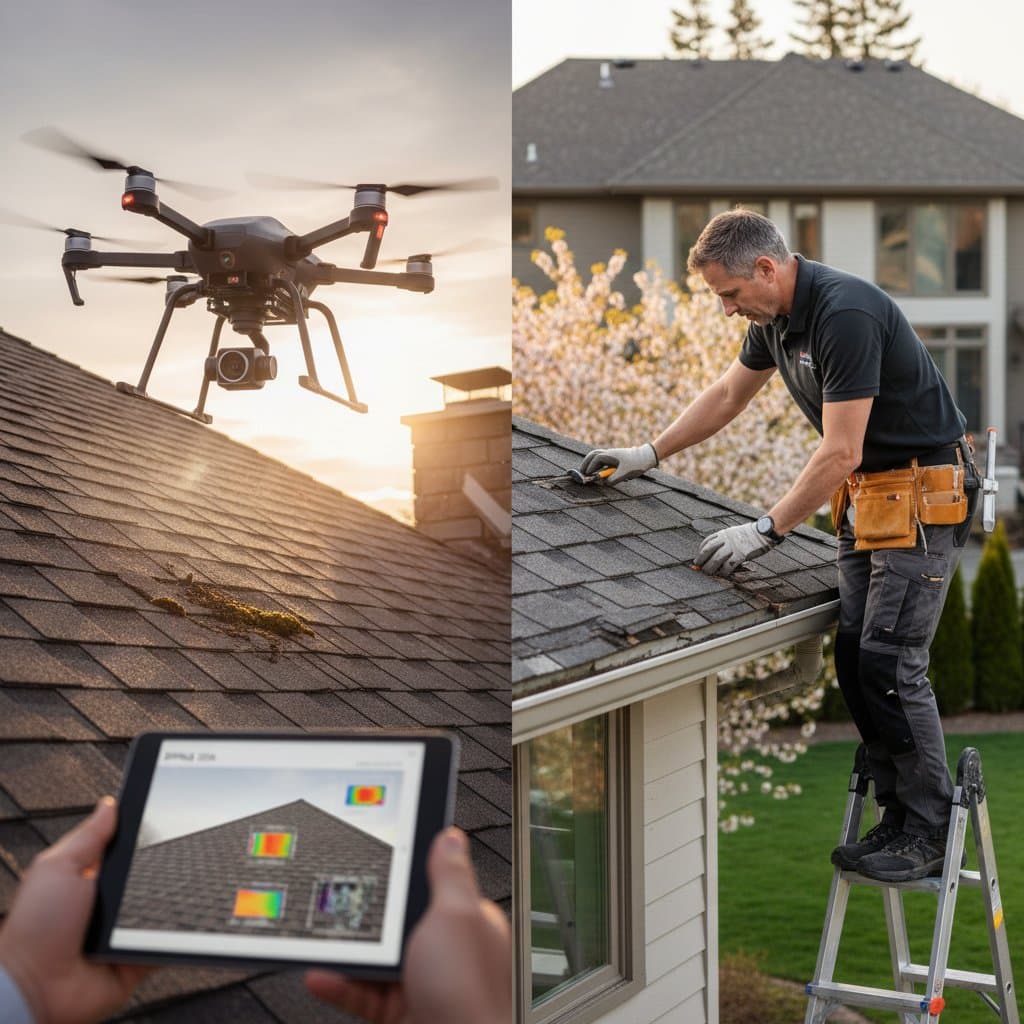
In practice, drones complement professional services effectively. Conduct drone flights biannually to monitor loose shingles or obstructed valleys. Schedule full professional inspections with moisture analysis every other year to maintain optimal roof condition while optimizing time and budget.
Optimal Timing for Inspections
Spring represents high demand for roofing professionals, so early booking proves vital. Contractors fill schedules quickly as weather improves. Secure appointments before the season peaks if professional services are preferred.
Drone operators must consider weather and lighting conditions. Windy conditions disrupt stability and image sharpness, as learned through trial and error. Select calm days with clear sunlight to minimize glare, and steer clear of cloudy weather where shadows accentuate shingle flaws.
Anticipate potential supply chain disruptions that delay shingle or gutter replacements for weeks. Proactive inspections enable material orders ahead of price surges from shortages.
Analyzing Drone Imagery Effectively
High-quality images do not guarantee accurate diagnoses. Dark streaks captured in one spring assessment suggested moisture intrusion, yet a professional identified them as harmless algae growth.
Key steps for reviewing drone footage include:
- Identifying raised edges or absent shingles.
- Examining flashing near vents, skylights, and chimneys.
- Assessing valleys for accumulated debris or color changes.
- Utilizing magnified stills to track variations over time.
For ambiguous findings, consult a roofing expert remotely. Numerous firms provide analysis services for 75 to 150 dollars, offering expert guidance without requiring an in-person visit.
Implementing Your Inspection Plan
If the last roof check occurred in the previous fall, initiate action immediately. The objective remains consistent across methods: pinpoint issues before they escalate into significant expenses.
Actionable Steps for Homeowners:
- Evaluate available equipment. Test drone camera resolution and flight reliability if owned.
- Schedule the inspection. Select a dry, wind-free day for optimal visibility.
- Obtain comprehensive images. Target valleys, ridges, and flashing areas.
- Examine recordings thoroughly. Note sections warranting further scrutiny.
- Engage a professional as necessary. Address any indications of structural concerns promptly.
For professional options, obtain quotes from at least three certified contractors. Specify requirements for written reports including photographs and moisture evaluations to ensure thorough documentation.
Safeguarding Your Investment Long-Term
Regular spring inspections, whether through drones or experts, fortify your home against unforeseen damage. This diligence not only averts costly surprises but also enhances property value. Adopt a hybrid strategy to balance accessibility with precision, ensuring sustained roof performance season after season.