Achieving 90%+ ROI with 2025 Bathroom Remodels
Home renovation costs continue to rise in 2025 due to material shortages and increased labor rates. However, bathrooms represent one of the most effective investment areas. A thoughtfully executed remodel enhances daily comfort and significantly boosts resale value.
Expert insights reveal that strategic choices in design, materials, and functionality prevent common overspending pitfalls. The following sections outline data-backed returns and practical steps to achieve high ROI.
Understanding High Returns on Bathroom Investments
Prospective homebuyers frequently prioritize updated bathrooms in their searches. Even targeted remodels can recover 90% or more of costs upon resale. Real estate professionals note that a modern, clean bathroom signals overall home maintenance quality.
Mid-range projects generally range from $12,000 to $18,000, varying by location and scope. High-end options exceeding $25,000 suit luxury markets but often yield lower proportional returns. Optimal ROI emerges from balanced upgrades: durable materials, efficient fixtures, and layout adjustments that avoid extensive plumbing changes.
Deciding Between DIY and Professional Assistance
Bathrooms demand precision, making full DIY suitable only for those with substantial experience. Individuals can manage certain tasks independently, but complex elements require licensed experts to ensure safety and compliance.
Tasks Suitable for DIY:
- Demolition of old tiles or vanities
- Painting of walls or ceilings
- Installation of towel bars, mirrors, and accessories
Tasks Requiring Professional Expertise:
- Waterproofing and tile installation
- Plumbing modifications or fixture placements
- Electrical enhancements, including new lighting or heated flooring
Neglecting professional involvement risks water damage, inspection failures, and voided insurance. Securing permits and expert supervision safeguards property value and long-term reliability.
Key Factors Driving 90%+ ROI in 2025
1. Prioritizing Energy and Water Efficiency
Incorporating low-flow toilets, faucets, and showerheads immediately lowers utility expenses. For instance, a $300 investment in these fixtures can reduce annual water bills by $100 or greater. Pairing them with LED lighting and high-efficiency ventilation fans further decreases electricity consumption.
Select models certified for water savings, such as those meeting EPA WaterSense standards. These choices not only cut costs but also appeal to environmentally conscious buyers, enhancing marketability.
2. Embracing Timeless, Neutral Designs
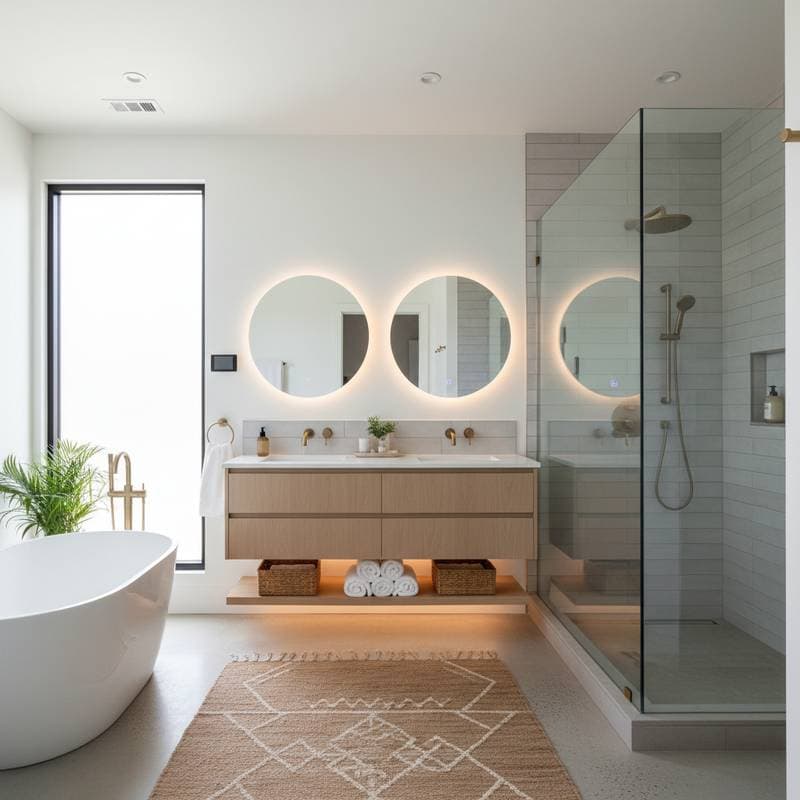
Contemporary buyers prefer sleek lines, neutral palettes, and organic textures. Opt for warm whites, soft grays, and wood accents to create an inviting atmosphere. Avoid bold trends or intricate patterns that may date quickly.
To implement this, choose matte finishes for fixtures and subway tiles for walls, which offer versatility and easy maintenance. Such designs maintain appeal over time, supporting sustained resale value.
3. Enhancing Everyday Functionality
Practical improvements like added storage and superior lighting often eclipse lavish materials in buyer perception. Install recessed medicine cabinets, open shelving units, or shower niches to streamline routines.
These additions typically cost under $1,000 yet provide substantial utility. For example, under-cabinet lighting improves visibility, while adjustable shelves accommodate varying needs, elevating the space's perceived quality.
4. Integrating Accessibility Elements
Features such as walk-in showers, dual-purpose grab bars, and handheld showerheads broaden appeal across demographics. These modifications subtly address aging-in-place preferences without altering aesthetics.
Professionals recommend non-slip flooring and lever-handled faucets for safety. Such inclusive designs can sway buying decisions, particularly in competitive markets, while costing minimal additional funds.
Analyzing ROI: Costs, Returns, and Strategic Focus
Successful bathroom remodels recoup 90% to 120% of expenses, influenced by local markets and project scale. Targeted updates frequently surpass comprehensive overhauls in efficiency.
Consider these examples:
- Tile and Fixture Replacement: Averages $8,000; achieves 95% ROI through refreshed appearance and basic functionality.
- Comprehensive Mid-Range Remodel: Averages $16,000; delivers 92% ROI with balanced enhancements.
- Luxury Custom Remodel: Averages $28,000; yields 80% ROI, best for high-end properties.
For resale priorities, emphasize universal appeal and utility over extravagance. Long-term residents benefit from efficiency gains and comfort, recouping value through reduced bills and enhanced livability.
Planning and Executing Your Remodel
Effective remodels demand thorough preparation. Begin by clarifying objectives: resale enhancement, personal comfort, or a combination. Establish a budget with a 10% contingency for unforeseen issues.
Collect inspiration images, precise measurements, and contractor consultations. Procure materials in advance and obtain necessary permits prior to starting demolition. Maintain regular communication with your team and conduct weekly inspections to track quality.
Select humidity-resistant materials like porcelain tiles and sealed wood vanities. Ensure robust ventilation systems to combat mold growth. A design rooted in enduring principles will serve well during occupancy and resale.
Realizing Lasting Benefits from Your Investment
The true value of a 2025 bathroom remodel lies in its dual role as a functional sanctuary and financial asset. Strategic execution transforms routine spaces into enduring assets. Homeowners gain immediate usability alongside reliable returns, proving this upgrade's worthwhile impact.