These details provide a foundation for realistic expectations and effective planning.
Detailed Cost Breakdown by Feature
Costs vary based on the selected features, each tailored to enhance safety and usability. Below is a table outlining typical expenses for common retrofits, including installation where applicable. Prices reflect 2026 projections, accounting for material inflation and labor trends.
| Retrofit Feature | Typical Cost Range | Notes |
|---|---|---|
| Grab bars | $150 to $500 | Positioned near the toilet, shower, and bathtub for support; choose rust-resistant models. |
| Comfort-height toilet | $300 to $800 | Raised design at 17 to 19 inches eases standing and sitting for those with limited mobility. |
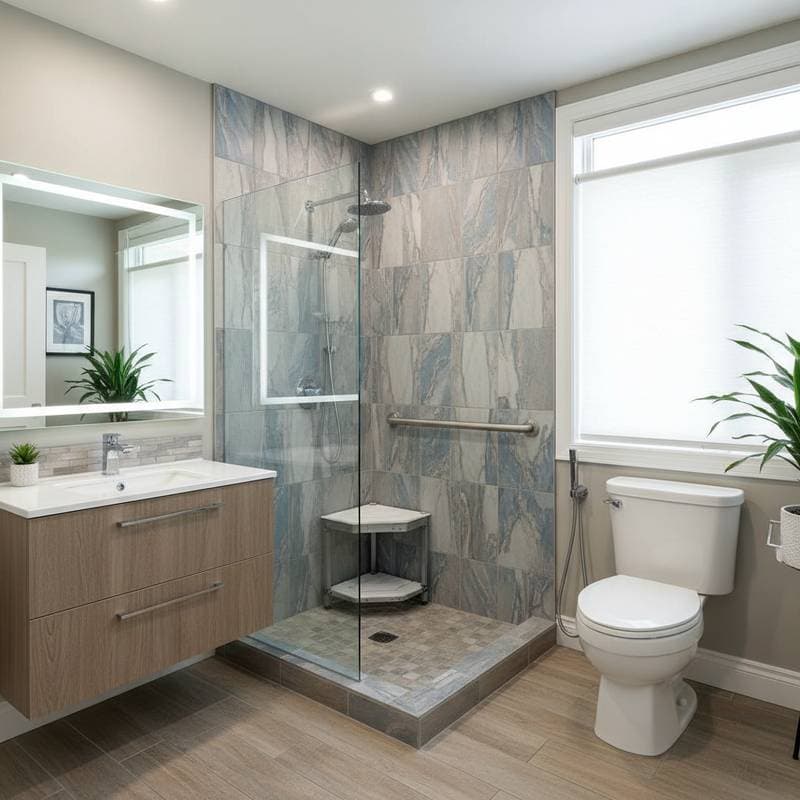
| Walk-in shower | $4,000 to $9,000 | Encompasses curbless entry, waterproof membranes, and integrated grab bars for seamless access. |
| Walk-in tub | $5,000 to $10,000 | Features low-step entry, optional hydrotherapy jets, and quick-drain systems for comfort. |
| Slip-resistant flooring | $800 to $2,500 | Vinyl or textured tiles with high traction coefficients; covers 50 to 100 square feet. |
| Widened doorway | $700 to $1,200 | Expands to 32 to 36 inches to accommodate wheelchairs or walkers without obstruction. |
| Lighting upgrades | $300 to $900 | LED fixtures with motion sensors and adjustable brightness to minimize shadows and glare. |
Additional factors like premium materials, such as natural stone or antimicrobial surfaces, can increase totals by 20 to 30 percent. For example, opting for a walk-in shower with built-in benches and handheld showers adds functionality but elevates costs toward the higher end. Always prioritize features addressing specific health concerns, such as arthritis or balance issues, to maximize return on investment.
Comparing DIY and Professional Approaches
Certain retrofits suit DIY efforts, particularly those not involving structural changes. Installing grab bars requires basic tools and anchoring into wall studs for stability, a task completable in a weekend. Similarly, swapping faucets or adding non-slip mats demands minimal expertise.
However, many elements necessitate professional intervention to comply with building codes and ensure longevity. Plumbing alterations for a walk-in tub risk water damage if mishandled, while electrical updates for lighting must meet safety standards. Professionals bring specialized knowledge of accessibility guidelines, such as those from the American with Disabilities Act, to create compliant spaces.
Consider hiring experts when the project includes:
- Wall removal or reconfiguration to accommodate wider doorways.
- Plumbing rerouting for new fixtures like comfort-height toilets.
- Electrical modifications for enhanced lighting or heated floors.
- Complex installations, including walk-in tubs or curbless showers with proper waterproofing.
To select a reliable contractor, request at least three references from similar projects, verify state licensing, and confirm insurance coverage. Inquire about their familiarity with aging-in-place designs, such as lever handles and lever faucets, which facilitate use without gripping strength. A detailed contract outlining timelines, costs, and warranties protects all parties and aligns expectations.
Strategies for Budget Management
Controlling expenses starts with prioritizing needs over wants. Assess the bathroom's current layout to identify high-impact changes, like adding grab bars before a full shower conversion. Obtain multiple quotes from local contractors to compare rates, and explore financing options such as home equity loans or tax credits for accessibility improvements.
Grants and rebates can offset costs significantly. Programs from organizations like AARP or local aging services may cover portions of safety features. Energy-efficient lighting or low-flow fixtures qualify for utility incentives, potentially saving hundreds upfront.
Phased implementation allows spreading payments over time. Begin with essential safety items, then add luxury elements like heated floors later. This method maintains cash flow while progressively enhancing the space.
Preserving and Extending Retrofit Benefits
Post-installation care sustains the bathroom's functionality and appearance. Wipe down grab bars weekly to remove residue that could compromise grip, and reseal caulk around fixtures annually to prevent moisture intrusion. Test flooring for slipperiness after cleaning, and reapply traction treatments as needed.
Schedule professional inspections every 12 months to evaluate plumbing integrity and electrical components. Early detection of issues, such as loose fixtures or deteriorating seals, averts costly repairs and maintains safety standards. Document all maintenance for warranty claims and future reference.
Investing in these retrofits yields immediate and enduring advantages. Enhanced safety reduces accident risks, while thoughtful design promotes daily ease. Ultimately, such upgrades boost home resale value by appealing to a broader demographic seeking accessible living.