DIY Difficulty: 2 out of 5.
When to Hire a Professional
Consider hiring a plumber or smart home technician in these situations:
- You require automatic shutoff capability connected to your main water valve.
- Your plumbing lines run behind finished walls, and assistance is needed to identify key installation points.
- You seek integration with a home security system that involves specialized wiring.
Professional installation generally costs between $200 and $400. This service guarantees reliable connectivity, precise leak calibration, and compliance with plumbing codes for valve modifications.
Obtain three free quotes from local contractors prior to selecting a system that alters your plumbing lines.
Money-Saving Strategies
Smart leak detection safeguards your home while allowing cost reductions without compromising effectiveness. Implement these approaches:
- Install sensors during a renovation: Incorporate them while remodeling or updating plumbing to minimize labor expenses.
- Select modular systems: Begin with three sensors and add more as your budget permits.
- Seek rebates: Certain insurance providers grant premium discounts of 5% to 10% for installing smart leak prevention devices.
- Bundle devices: Manufacturers often offer packages with multiple sensors at a lower price per unit.
- Opt for battery-powered models: These eliminate the need for electrician involvement and function during power outages.
Optimal Sensor Placement for Comprehensive Coverage
Effective placement outweighs brand selection in importance. Follow these guidelines to protect vulnerable areas:
- At the water heater base: Early detection prevents corrosion and potential tank rupture.
- Under the kitchen sink: Identifies slow drips from supply lines or garbage disposals.
- In the laundry area: Prevents overflows from washing machines or hose bursts.
- Near the bathroom vanity: Spots leaks from faucet lines before they harm cabinetry.
- By the basement floor drain or sump pump: Alerts to groundwater entry or pump malfunctions.
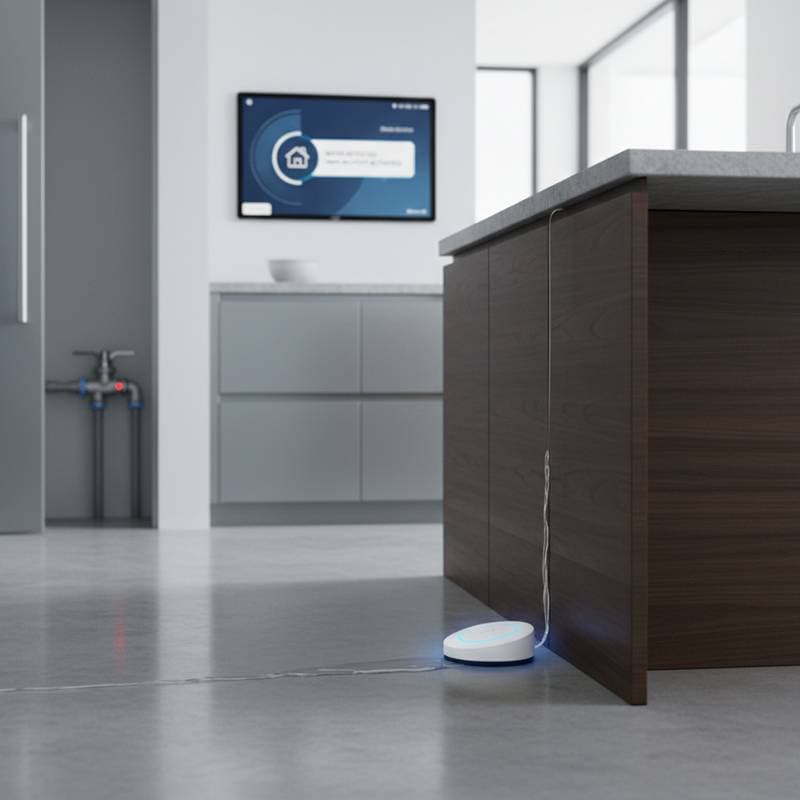
Position each sensor where it receives a strong Wi-Fi signal and rests on a flat, clean surface. Steer clear of carpeted floors, as they can delay moisture detection.
Routine Maintenance and Monitoring
These devices demand minimal upkeep, yet regular inspections ensure optimal performance:
- Test monthly: Apply a damp cloth to activate alerts and confirm app notifications.
- Replace batteries every 12 to 18 months: Choose lithium batteries for extended longevity.
- Check for corrosion: In humid environments, sensors may accumulate condensation.
- Analyze alerts: Advanced systems monitor humidity and temperature patterns to forecast plumbing problems.
For systems linked to an automatic shutoff valve, verify the valve's operation twice annually to ensure it functions without issues.
Safety Protocols and Code Compliance
Smart leak detectors supplement, but do not substitute for, code-mandated shutoff valves or backflow prevention devices. Consult local plumbing regulations before adding an automatic main valve controller. In certain areas, a licensed plumber must handle modifications to the main water line.
Water combined with electricity poses risks, so disconnect power sources when installing near outlets or wired elements. Refrain from splicing power cords or altering manufacturer wiring.
Return on Investment and Enhanced Home Value
Leak detection ranks among the most rewarding smart home investments. Benefits include:
- Averting expensive repairs: Stopping a single significant leak avoids $5,000 to $10,000 in structural and flooring restoration.
- Reduced insurance premiums: Qualifying carriers provide yearly savings of $50 to $150 for confirmed smart leak installations.
- Boosted buyer appeal: Integrated smart features can elevate home value by 2% or greater at resale.
- Minimized utility losses: Prompt notifications halt water waste from unnoticed drips, conserving up to 10,000 gallons annually.
Beyond finances, these systems deliver tranquility, allowing you to travel or rest assured that concealed leaks will not compromise your property.
Seamless Integration with Complementary Smart Devices
Leak detectors pair effortlessly with other technologies to fortify defenses:
- Smart thermostats: Adjust temperatures to avert pipe freezing.
- Smart plugs: Disconnect power to water-adjacent appliances upon leak detection.
- Security systems: Activate alarms or alert monitoring services.
- Home automation sequences: Close valves, illuminate areas, and dispatch notifications in response to threats.
Such connections form an interconnected safeguard that reacts swiftly to water risks.
Selecting a Suitable Brand
Evaluate brands based on these essential criteria:
- Connectivity: Assess Wi-Fi range and connection reliability.
- Sensor precision: Prioritize response times measured in seconds rather than minutes.
- Battery duration: Require at least one year per charge.
- App functionality: Ensure intuitive setup and detailed alert histories.
- Warranty coverage: Demand a minimum of three years for hardware and sensors.
Reputable choices encompass offerings from Moen, Flo, and Honeywell, which vary in automation levels and mobile compatibility.
Steps to Implement Your System
Begin by surveying your home for susceptible zones. Determine the required number of sensors for kitchens, bathrooms, laundry rooms, and basements. Compare models aligned with your budget and network setup.
If you possess experience with smart devices, set up a hub-based system independently within an afternoon. For intricate plumbing or aging pipes, engage a plumber to incorporate an automatic shutoff valve.
After installation, conduct monthly sensor tests and maintain fresh batteries. Leverage the app to track humidity levels, identify irregularities, and obtain immediate notifications of unauthorized water presence.
Locate licensed professionals nearby if integrating detectors with current plumbing or automation infrastructure.
Sustaining Long-Term Home Protection
Commit to ongoing vigilance through regular testing and updates to your leak detection setup. This proactive approach not only preserves your investment but also fortifies your home against unforeseen water threats, ensuring enduring security and efficiency.