2026 Flood-Proof Floors That Slash Insurance Claims
When Mark and Alicia purchased their cottage near the river, they anticipated leisurely summer picnics rather than repeated episodes of water-damaged flooring. Two floods within three seasons revealed that their attractive oak planks offered little defense against rising waters. The resolution extended beyond aesthetics; it encompassed security, durability, and reductions in insurance premiums. Flood-proof flooring, previously a specialized option, has emerged as an essential element in strategic home planning.
Selecting the appropriate material determines whether a minor incident requires only basic cleanup or leads to extensive reconstruction. As insurance providers impose stricter criteria for claim approvals, homeowners seek floors that repel water, dry rapidly, and retain their appearance over time.
This article examines flood-resistant flooring materials, installation strategies for moisture-vulnerable zones, and modifications that lower insurance expenses.
Challenges with Traditional Flooring
Many residences feature conventional wood or laminate floors that appear elegant yet absorb moisture readily. Water infiltration causes boards to expand, distort, and separate from the subfloor. Even minor flooding can foster persistent mildew hidden below the surface.
Prior to their upgrade, Mark and Alicia's kitchen floor seemed intact from afar. Upon closer inspection, edges had begun to lift, and the surface felt irregular. Insurance covered the initial damage, yet the adjuster advised them to install flood-rated materials, noting that subsequent claims could face denial.
Such cautions are increasingly standard. Certain insurers now require documentation of flood-resistant features in vulnerable regions prior to policy renewal.
Defining True Flood Resistance
Effective flood-resistant flooring surpasses mere waterproofing. It also inhibits microbial development, facilitates swift drying, and maintains structural integrity following extended water contact.
Key attributes include:
- Non-absorbent core: Options such as PVC, stone composites, or sealed concrete block water penetration.
- Secure locking mechanisms: Click-lock systems reduce spaces where moisture might intrude.
- Protected edges: Sealed or integrated edges prevent seepage along joints.
- Modular replacement: Individual tiles or planks can be removed and repositioned without dismantling the entire floor.
The following sections detail reliable material selections gaining popularity among homeowners.
1. Luxury Vinyl Plank
Luxury vinyl plank stands out for its versatility and affordability in flood-prone settings. This synthetic material mimics wood or stone visuals while providing robust water resistance.
Performance benefits: The PVC-based core repels water entirely, and it installs over existing subfloors with minimal preparation. It suits kitchens, living rooms, and hallways where spills occur frequently.
Design considerations: Select planks with textured surfaces to enhance grip and pair them with underlayment for added sound insulation and comfort.
2. Porcelain Tile
Porcelain tile remains a preferred choice in areas susceptible to flooding. Its composition renders it dense, durable, and impervious to water when properly grouted.
Performance benefits: Porcelain absorbs negligible moisture, making it suitable for basements, entryways, and bathrooms. Large-format versions minimize grout lines, simplifying post-flood maintenance.
Design considerations: Opt for matte finishes with neutral grout colors to balance safety and aesthetic appeal.
3. Engineered Stone Composite
Engineered stone composites combine natural aggregates with resins for a premium, flood-resistant surface. These options deliver the elegance of stone without the vulnerabilities of traditional installations.
Performance benefits: The sealed composition resists water absorption and cracking, ideal for high-traffic zones like dining areas. It withstands submersion and dries without warping.
Design considerations: Choose vein-patterned varieties to emulate marble or quartz, and integrate with matching thresholds for seamless transitions.
4. Rubber Flooring
Rubber flooring excels in utility spaces such as gyms, laundry rooms, and basements. It offers inherent water repellency and superior cushioning.
Performance benefits: Sheets or tiles made from natural or synthetic rubber shed moisture and deter mold formation. The material provides consistent traction even when wet.
Design considerations: Select low-profile tiles with smooth tops for straightforward cleaning after water exposure.
5. Sealed Concrete
Sealed concrete transforms existing slabs into viable flood-resistant floors. This approach leverages the home's foundation for cost-effective protection.
Performance benefits: Epoxy or polyurethane sealants create a barrier against water while enhancing durability. It performs well in garages and unfinished basements.
Design considerations: Apply stains or polishes to achieve desired hues, ensuring the finish includes anti-slip additives.
Optimizing Installation for Flood Protection
Superior materials falter without proper installation. Effective flood-proofing begins during the preparation phase.
- Subfloor treatment: Apply a waterproof membrane or sealant to the base layer prior to laying new flooring.
- Perimeter allowances: Incorporate narrow expansion gaps around edges to accommodate potential movement and avoid distortion.
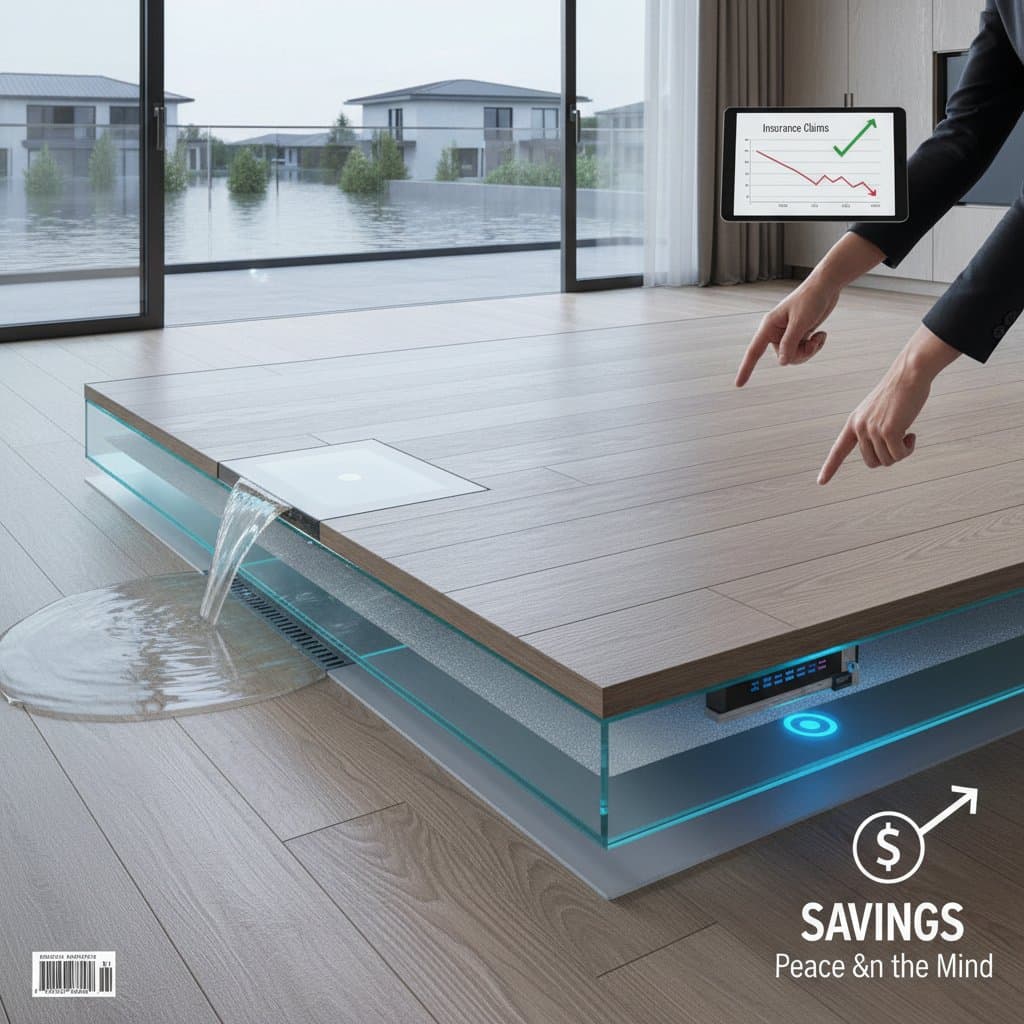
- Drainage integration: Install floor drains beneath access panels in basements or utility spaces to facilitate water removal.
- Baseboard selections: Employ PVC or tile alternatives to wood trim, which readily takes on moisture.
Professional installers often recommend raising electrical outlets and positioning moisture detectors along floor perimeters. These measures mitigate risks and preserve investments.
Estimating Expenses
Flood-resistant upgrades align with various budgets without necessitating excessive spending.
- Luxury vinyl plank: Falls in the moderate range per square foot, covering materials and labor.
- Porcelain tile: Involves a modest premium, justified by its extended service life.
- Engineered stone composite: Commands higher costs, offset by low upkeep demands.
- Rubber flooring: Remains affordable, varying with density and surface treatments.
- Sealed concrete: Features economical materials, with finishing adding moderate fees.
For comprehensive renovations, blend materials judiciously. Install porcelain in high-exposure entry points and luxury vinyl in primary living spaces to optimize protection and expenditure.
Integrating Flood-Proof Floors into Everyday Routines
These materials contribute more than water resistance; they streamline household tasks and enhance comfort.
Alicia, managing a family with two children and a dog, noted that maintenance has become simpler. Cleanup from muddy paws or spills requires minimal effort, fostering a more relaxed home environment. No apprehension arises during rainy weather.
Such floors endure everyday hazards like humidity, accidental liquids, and heavy use. They maintain a comfortable temperature year-round and pair effectively with underfloor heating systems. Their appearance endures, supporting active lifestyles without compromise.
Securing Long-Term Home Resilience
Flood-proof flooring integrates seamlessly into daily life, providing unobtrusive safeguarding. Homeowners who adopt these solutions experience reduced stress from environmental threats and financial safeguards through lower insurance obligations. Evaluate your space's needs and consult experts to implement changes that endure.