2026 Bathroom Remodel Costs: A Tiered Budget Overview
Homeowners often approach a bathroom remodel with enthusiasm for enhanced comfort and style. However, initial quotes reveal a broad spectrum of expenses, shaped by factors such as material quality and project complexity. In 2026, rising labor costs and supply chain challenges contribute to higher overall prices, yet strategic decisions allow for effective budget management.
This guide examines three distinct budget tiers: budget, mid-range, and premium. Each tier aligns with different homeowner objectives, from basic functionality to luxurious transformation. Understanding these levels helps balance aesthetic aspirations with financial realities, ensuring a worthwhile investment that enhances daily living and property value.
Defining the Budget Tiers for Your Remodel
Remodel projects naturally segment into tiers based on expenditure levels. Selection of a tier hinges on your specific needs, the current state of your home, and your long-term residency plans. Below, each tier receives detailed examination, including cost breakdowns, material recommendations, and suitability factors.
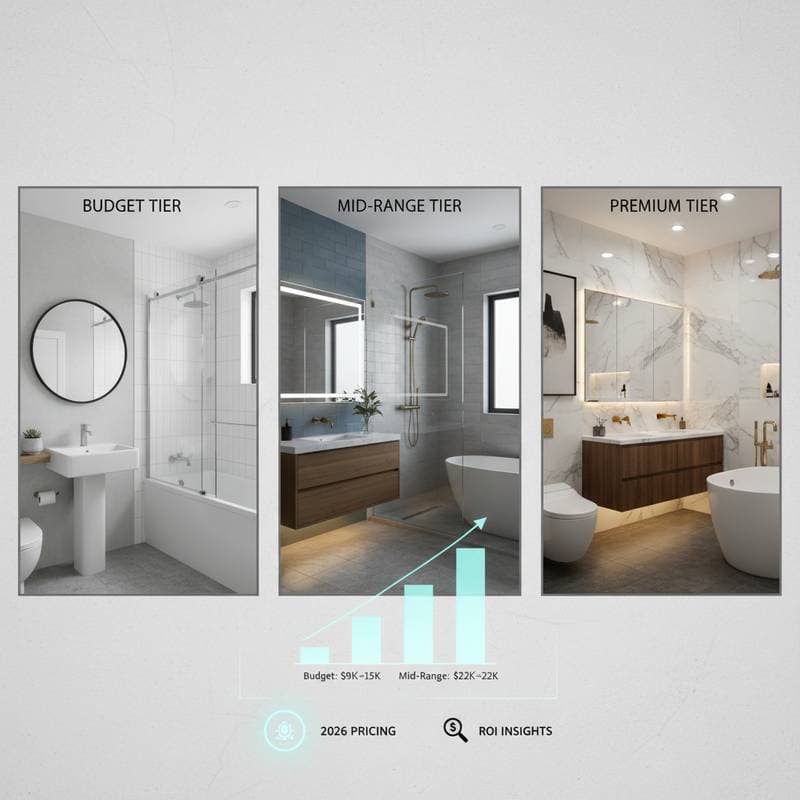
Budget Remodel: $9,000 to $14,000
This entry-level tier suits compact bathrooms or superficial refreshes in larger spaces. Homeowners prioritize essential updates without structural alterations, focusing on reliability and modest visual appeal.
Key cost components include:
- Materials: $4,000 to $6,000, covering basic tile options, standard fixtures, and neutral paint finishes.
- Labor: $5,000 to $7,000, varying by local rates and task simplicity.
To control expenses, maintain the existing layout and avoid relocating plumbing. Opt for replacing the vanity, toilet, and flooring with durable, affordable alternatives like vinyl plank or ceramic tile. Consider prefabricated shower surrounds and laminate surfaces for efficiency. In one project, handling demolition personally reduced costs by approximately $1,200, though professional assistance remains essential for plumbing tasks. Secure necessary permits for any work involving water supply connections to ensure compliance and safety.
This approach proves ideal for starter homes or rental units, where emphasis lies on practical enhancements that support quick occupancy. Return on investment stands at about 55 percent, driven by improved functionality that appeals to budget-conscious buyers.
Mid-Range Remodel: $15,000 to $23,000
The mid-range tier offers a balanced upgrade, incorporating moderate customizations and quality materials for enhanced durability and style. It appeals to families or long-term residents seeking comfort without extravagant spending.
Breakdown of expenses reveals:
- Materials: $7,000 to $11,000, including mid-grade quartz countertops, upgraded faucets, and patterned tiles.
- Labor: $8,000 to $12,000, accounting for minor layout adjustments and professional installation.
Focus on value-driven choices, such as semi-custom cabinetry and efficient lighting fixtures, to elevate the space. For instance, installing a walk-in shower with glass doors adds openness while keeping costs manageable. Evaluate energy-efficient options like low-flow toilets to qualify for potential rebates. Engage a contractor early to assess feasibility, and budget for basic electrical updates if adding heated floors or exhaust fans.
This tier fits well for primary residences where daily usability matters most. It delivers a return on investment of roughly 60 percent, as buyers appreciate the blend of modern features and solid craftsmanship that withstands regular use.
Premium Remodel: $24,000 to $31,000 and Beyond
At the premium level, the bathroom evolves into a sophisticated sanctuary with bespoke elements and expansive designs. This tier demands careful planning to justify the investment through superior quality and aesthetic impact.
Primary allocations encompass:
- Materials: $10,000 to $15,000, featuring natural stone slabs, designer glass enclosures, and premium hardware.
- Labor: $12,000 to $18,000, involving structural modifications, custom routing of utilities, and intricate detailing.
Incorporate high-end features like rain showerheads or underfloor heating, but verify building codes for additions such as freestanding tubs or skylights. One enhancement, a custom soaking tub paired with ambient lighting, increased expenses by about $6,000 yet boosted the room's allure significantly. Consult engineers for load-bearing concerns with heavy installations, and prepare for extended timelines due to specialized sourcing.
Premium remodels serve homeowners committed to enduring luxury or staging upscale properties. They yield a 65 percent return on investment, attracting discerning purchasers who value spa-inspired amenities as markers of refined living.
Strategic Timing and Supply Chain Considerations
Timing influences both cost and convenience in bathroom projects. Avoid peak seasons from late spring through summer, when demand surges and contractor availability dwindles. Instead, target fall or winter slots for more flexible scheduling and potential discounts.
Proactive material procurement mitigates delays. Order essential items like tiles, vanities, and fixtures at least four to six weeks in advance, especially for custom pieces such as etched glass panels, which require two to three weeks of production. Monitor supplier inventories for fluctuations in pricing, and consider bulk purchases for savings on matching sets. Document all selections with samples to prevent on-site mismatches.
By aligning your timeline with off-peak periods, you secure better rates and smoother execution. This preparation transforms potential obstacles into opportunities for efficiency.
Steps to Plan and Execute Your Remodel
Initiate the process by identifying core priorities, such as storage needs or accessibility features. Research each component's pricing through local suppliers and online catalogs to establish realistic expectations. Assemble a checklist of elements, from demolition to final touches, and allocate funds accordingly.
Incorporate a contingency reserve of 10 to 15 percent to address unforeseen issues, including subfloor repairs or code-related wiring upgrades. Solicit bids from at least three licensed contractors, reviewing portfolios and client testimonials for assurance of quality. Schedule consultations to discuss timelines and material preferences, ensuring alignment with your vision.
Regular site visits during construction maintain oversight and allow for timely adjustments. Upon completion, conduct a thorough walkthrough to verify satisfaction with finishes and operations.
Realizing Value Through Your Bathroom Upgrade
A thoughtfully executed bathroom remodel elevates routine experiences while fortifying your home's market position. Each tier provides pathways to personalization, from essential repairs to opulent retreats. With informed budgeting and deliberate choices, you achieve a space that delivers sustained enjoyment and financial returns.