Introduction to Basement Waterproofing in 2025
Basement waterproofing protects your home's foundation from water damage, which can lead to mold growth, structural issues, and reduced property value. In 2025, homeowners face rising material and labor costs, but investing in waterproofing yields significant long-term savings. This guide details average costs, effective methods, and practical steps to ensure your basement remains dry and functional.
Water intrusion often stems from poor drainage, high water tables, or foundation cracks. Early detection prevents escalation, allowing for targeted solutions rather than extensive repairs. Understanding your options empowers informed decisions tailored to your home's needs.
Understanding Basement Waterproofing Costs
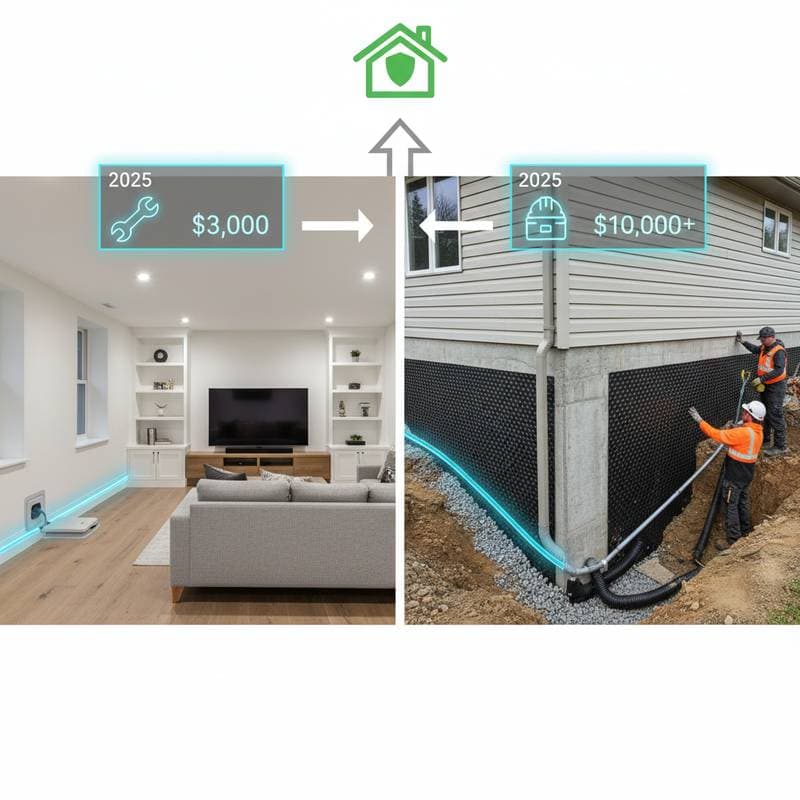
The national average for basement waterproofing in 2025 falls between $3,000 and $10,000, with most projects costing $5,000 to $7,000. Prices vary based on several factors, including the basement's size, the extent of water damage, and the chosen method.
Key Factors Influencing Costs
- Basement Size and Layout: Larger areas require more materials and labor. A 1,000-square-foot basement might cost $4,000 for basic interior sealing, while a 2,000-square-foot space could exceed $8,000 for comprehensive exterior work.
- Type of Waterproofing Method: Interior solutions average $2,000 to $6,000, focusing on managing water inside the home. Exterior methods range from $5,000 to $15,000 or more, involving digging around the foundation.
- Condition of the Foundation: Minor cracks add $500 to $2,000 for repairs. Severe structural issues, such as settling or bowing walls, can push costs toward $10,000 or higher.
- Location and Accessibility: Urban areas with higher labor rates increase expenses by 20 to 30 percent. Hard-to-reach basements demand additional equipment, adding $1,000 or more.
- Additional Features: Installing a sump pump costs $650 to $1,500, while French drains run $1,500 to $4,000 per 50 linear feet.
Budget for a professional inspection, which typically costs $100 to $300, to get an accurate estimate. These assessments reveal hidden issues and prevent underestimating the project scope.
Comparing Interior and Exterior Waterproofing Methods
Homeowners must choose between interior and exterior waterproofing based on their budget, timeline, and the severity of water problems. Each approach addresses water differently, with distinct pros and cons.
Interior Waterproofing
This method controls water that enters the basement by redirecting it to a drainage system rather than preventing entry. It suits homes with minor leaks or high water tables.
- Sealants and Coatings: Apply hydraulic cement or epoxy to cracks and walls. Costs: $1,000 to $3,000 for a standard basement.
- Interior Drain Systems: Install perforated pipes along the footer to collect water, leading to a sump pump. Costs: $2,000 to $5,000.
- Sump Pumps: These devices pump water out of the basement. Battery backups add reliability for $200 to $500.
Interior work disrupts daily life less and completes faster, often in a few days. However, it does not address external sources, so water pressure against walls may persist.
Exterior Waterproofing
This comprehensive solution seals the foundation from the outside, ideal for severe flooding or preventive measures in new constructions.
- Excavation and Membrane Application: Dig around the foundation, apply waterproof membranes, and install drainage boards. Costs: $5,000 to $10,000 for a typical home.
- Exterior Drainage Systems: Add French drains or swales to divert surface water. Costs: $2,000 to $6,000.
- Foundation Repairs: Fix cracks with polyurethane injections or reinforce walls with steel beams. Costs: $3,000 to $8,000.
Exterior methods provide lasting protection but involve heavy excavation, potentially damaging landscaping. Projects last one to four weeks, depending on soil conditions.
Consult a structural engineer for homes over 20 years old to evaluate if exterior work is necessary. Combining both methods offers the most robust defense against water intrusion.
Ways to Save on Basement Waterproofing
Waterproofing investments pay off through avoided repairs, but smart planning reduces upfront expenses.
- Address problems early. Repair small cracks with epoxy kits for $50 to $200, averting $1,000-plus in future damage.
- Combine projects. Integrate waterproofing during basement remodeling to save 10 to 20 percent on labor.
- Ask about financing. Contractors often provide 0 percent interest plans over 12 months, easing cash flow.
- Check for rebates or tax credits. Programs like ENERGY STAR offer up to $500 for efficient drainage upgrades that manage runoff.
- Compare at least three quotes. Evaluate not just price but also 10- to 20-year warranties, material quality, and references.
Shop during off-peak seasons, such as late fall, when contractors may discount rates by 15 percent to fill schedules.
DIY vs Hiring a Pro
Handy homeowners can tackle minor tasks, but complex issues require experts to avoid costly errors.
DIY-Friendly Tasks
- Apply waterproof paint or sealant to walls using a roller and brush. Expect to spend $100 to $300 on supplies.
- Patch minor foundation cracks less than one-quarter inch wide with concrete filler.
- Run a portable dehumidifier to control humidity levels below 50 percent.
- Clean gutters annually and extend downspouts five to ten feet from the house with PVC extensions.
These steps maintain dryness between professional services and cost under $500 total.
Professional-Only Work
- Install interior drain systems or sump pumps, which demand precise grading and electrical connections.
- Perform exterior excavation or apply protective membranes to avoid undermining the foundation.
- Repair structural cracks or reinforce walls using hydraulic jacks and carbon fiber straps.
- Conduct mold remediation with industrial-grade cleaners and ventilation equipment.
DIY mistakes, like improper sealing, can trap moisture and accelerate deterioration. For projects over $1,000 or involving structural elements, hire licensed contractors insured for at least $1 million in liability.
When to Waterproof Your Basement
Timing affects both effectiveness and cost. Waterproof during dry weather, ideally spring or fall, when soil is stable and visibility is clear for inspections.
Schedule immediately if signs appear: efflorescence on walls, buckling floors, or persistent dampness. Delaying allows mold to colonize within 48 hours of exposure, complicating remediation.
For new homes, incorporate waterproofing during construction to cut long-term expenses by 30 percent. In existing structures, act after major storms or if water levels rise in nearby wells.
Maintaining Your Investment
Routine care ensures your waterproofing system performs for 20 years or more, minimizing repair needs.
- Test sump pumps biannually by pouring water into the basin and verifying activation within 30 seconds.
- Clear gutters every three months and ensure downspouts direct water at least ten feet away.
- Reapply interior sealants every two to five years, checking for wear after inspections.
Inspect the foundation perimeter post-rainfall for cracks wider than one-eighth inch. Maintain a two percent slope in yard grading to channel water away from the house.
Securing Long-Term Benefits
A well-waterproofed basement enhances living space, improves energy efficiency by reducing humidity, and safeguards against $10,000-plus in flood damage. It also appeals to buyers, potentially increasing home value by five to ten percent.
Act promptly on any water signs to preserve your home's integrity. Professional waterproofing delivers reliability, transforming potential vulnerabilities into assets for comfortable, valuable living.