What $15K vs $50K Gets in a Bathroom Remodel
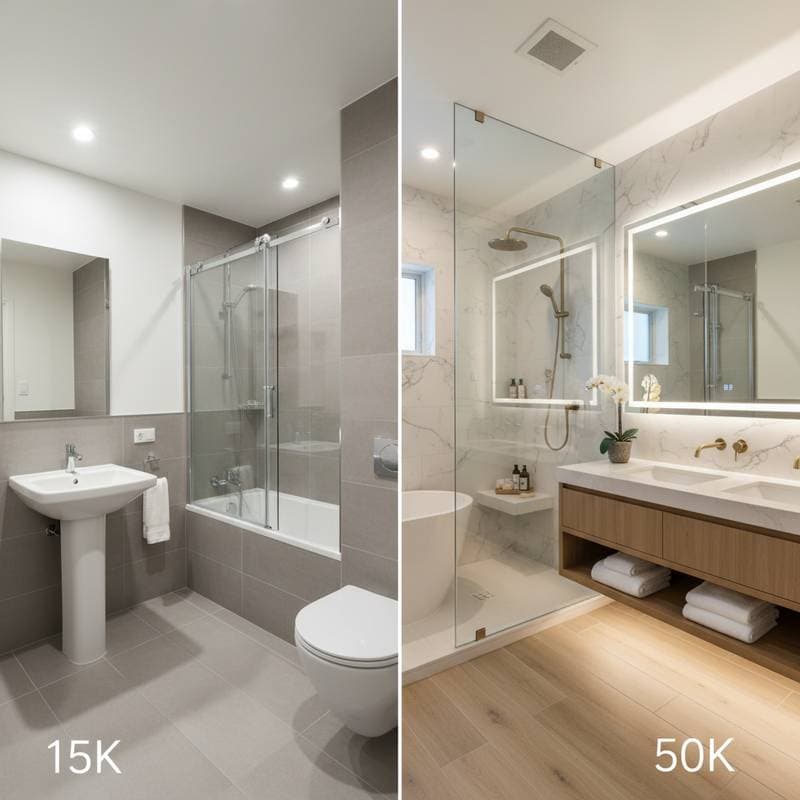
Selecting the budget for a bathroom remodel involves balancing design preferences with essential system upgrades. A $15,000 project focuses on cosmetic enhancements and basic functionality, while a $50,000 investment allows for comprehensive overhauls of plumbing, electrical, and ventilation systems. These choices influence not only immediate comfort but also the space's long-term performance and maintenance needs. Homeowners benefit from evaluating how each budget level addresses infrastructure demands to align with their lifestyle and home conditions.
System Overview
Bathroom remodels integrate multiple systems that work together to create a functional, safe environment. Key components include plumbing for water delivery and drainage, electrical wiring for lighting and outlets, ventilation for air quality, and surface materials for durability.
Core System Details
- Technology Type: Plumbing pipes and fixtures, electrical circuits and lighting, ventilation fans, and moisture-resistant surfaces.
- Efficiency Rating: WaterSense-certified fixtures reduce water use by up to 20 percent; LED lighting cuts energy consumption by 75 percent compared to incandescents; Energy Star-rated fans improve airflow while minimizing noise.
- Climate Adaptations: Designs adjust for all U.S. Department of Energy climate zones, with enhanced moisture barriers in humid areas and insulation in cold regions.
- Ventilation Capacity: Ranges from 50 cubic feet per minute (CFM) for small spaces to 110 CFM or higher for larger bathrooms.
- Expected Lifespan: 20 years or more when maintained regularly, including annual fan cleaning and seal inspections.
- Installation Requirements: Moderate complexity for basic updates; high complexity for full rerouting, requiring licensed professionals.
- Compliance Standards: All work must adhere to local building codes for plumbing, electrical safety, and ventilation efficacy.
These elements form the foundation of any remodel, ensuring the bathroom operates efficiently within the home's broader systems.
Regional Performance Considerations
Bathrooms function as controlled microenvironments, where local climate directly affects material choices and system performance. In humid or coastal areas, excess moisture poses risks to walls and fixtures, potentially leading to mold and structural damage. A $15,000 remodel might rely on standard drywall paired with an 80 CFM exhaust fan, which suffices for mild conditions but falls short in high-humidity zones by allowing vapor buildup over time.
Higher budgets enable advanced protections, such as cement board backing on walls, comprehensive vapor barriers under flooring, and variable-speed fans exceeding 110 CFM that activate based on humidity sensors. These features maintain dry conditions and prevent costly repairs.
In colder climates, the emphasis shifts to energy conservation and user comfort. Options like radiant floor heating, insulated subfloors beneath tile, and low-flow faucets with aerators optimize warm water use and reduce heat loss. The $50,000 remodel incorporates these seamlessly for year-round efficiency, whereas the lower budget prioritizes essential updates over advanced thermal features, potentially increasing heating costs by 15 to 20 percent annually.
Homeowners in variable climates should assess seasonal humidity and temperature swings to select systems that adapt effectively.
Key Feature Comparisons
Comparing the two budget levels highlights tangible differences in quality, functionality, and longevity. The table below outlines core aspects, from foundational systems to aesthetic finishes.
| Feature | $15K Remodel | $50K Remodel |
|---|---|---|
| Plumbing System | Retains existing pipes with minor fixture swaps | Complete replacement, including rerouting for optimal flow |
| Electrical | Upgrades to basic LED lights on current circuits | Dedicated new circuits with dimmable, multi-layer lighting |
| Ventilation | Standard 80 CFM exhaust fan | Humidity-sensing, variable-speed fan at 110+ CFM |
| Fixtures | Basic WaterSense toilets and faucets | Thermostatic showers, digital controls, and bidet seats |
| Finishes | Laminate vanities, acrylic tubs, standard tile | Quartz countertops, porcelain tiles, natural stone accents |
| Waterproofing | Basic grout sealing and silicone caulking | Multi-layer membrane systems with integrated vapor barriers |
| Lifespan | 10 to 15 years | 20+ years with routine maintenance |
| Annual Maintenance | Moderate, around $200 to $300 for cleaning and checks | Low, $100 to $150 due to durable, self-sealing materials |
These distinctions show how increased spending elevates both daily use and resilience against wear.
Cost-Benefit Evaluation
A $15,000 remodel provides swift, noticeable upgrades ideal for short-term residents or investment properties. It refreshes outdated elements like vanities and lighting, boosting curb appeal for resale. With WaterSense fixtures and LED bulbs, monthly water and electricity bills drop by 10 to 15 percent, offering quick payback through utility savings estimated at $150 to $250 per year.
In contrast, the $50,000 approach delivers superior value over time through robust systems that minimize future expenses. Premium waterproofing and efficient ventilation reduce mold remediation costs, which average $2,000 to $5,000 per incident. Energy-efficient integrations, such as insulated walls and smart thermostats, yield cumulative savings of up to 25 percent on utilities over two decades, recouping about 20 to 25 percent of the initial outlay.
Both levels justify their costs when matched to homeowner goals, but the higher investment shines in homes planned for long-term occupancy.
Expert Guidance for Planning
Engage licensed plumbers and electricians from the outset to inspect existing infrastructure and recommend feasible upgrades. For extensive projects, involve a mechanical engineer to model ventilation airflow and ensure humidity levels stay below 60 percent. In areas prone to groundwater issues, hire an energy auditor to detect vapor intrusion through concrete slabs prior to flooring installation.
These professionals help avoid surprises, such as hidden pipe corrosion that could add $5,000 to costs if overlooked.
Steps to Select Your Remodel Budget
The choice between $15,000 and $50,000 hinges on residency duration, regional challenges, and current setup. Start by inspecting key areas to inform your decision.
- Assess Plumbing: Check for leaks, rust, or reduced water pressure indicating pipe degradation.
- Review Electrical: Test outlet capacity and grounding to handle modern appliances without overloads.
- Evaluate Ventilation: Use a hygrometer to measure post-shower humidity; levels above 70 percent signal inadequate exhaust.
- Consider Lifestyle: Factor in family size and usage frequency for features like multiple showerheads or heated towel racks.
A modest remodel enhances aesthetics and basics when infrastructure holds up, delivering reliable performance without excess. Opting for the full upgrade builds a resilient, comfortable sanctuary that withstands daily demands and environmental stresses for generations.