2025 Kitchen Remodel ROI: Cabinets vs. Countertops
Homeowners face challenging decisions when planning kitchen renovations. Cabinets and countertops form the core of both aesthetics and daily use, yet they vary significantly in upfront costs, maintenance needs, and potential to boost home value. A clear understanding of their performance over time enables informed choices that enhance usability while building equity.
This analysis examines key factors such as material durability, installation demands, and return on investment. By evaluating these elements, readers gain practical insights to prioritize upgrades effectively.
Key Components and Their Roles
Cabinets provide essential storage and structural support in any kitchen layout. They accommodate dishes, appliances, and pantry items, influencing workflow efficiency. Countertops serve as primary work surfaces for food preparation, offering durability against daily wear.
Typical kitchen setups include 12 to 24 cubic feet of cabinet storage per unit and 40 to 60 square feet of countertop space. These dimensions accommodate standard family needs, from compact islands to expansive perimeter designs.
Lifespans differ notably: cabinets endure 20 to 50 years with proper care, while countertops last 15 to 30 years. Factors like material quality and usage patterns determine these ranges.
Installation varies from moderate for surface replacements to complex for full cabinet overhauls, which may require wall reinforcements or plumbing adjustments.
Climate and Material Considerations
Environmental conditions affect long-term performance. In humid or coastal areas, cabinets constructed from plywood resist moisture better than those made from particleboard, which absorbs water and warps over time.
Countertops face similar challenges. Stone and engineered quartz withstand humidity fluctuations without swelling, unlike laminate or solid wood options that degrade in damp settings. For arid regions, materials with thermal stability prevent cracking from temperature swings.
Homeowners in variable climates should select finishes with protective sealants. Regular inspections help identify early signs of wear, such as loosening hinges on cabinets or etching on counter surfaces.
Integration with Existing Systems
Updating cabinets or countertops demands careful coordination with kitchen infrastructure. Plumbing lines for sinks and dishwashers must align with new cabinet bases, while electrical outlets require repositioning to match countertop edges.
Ventilation systems, including range hoods, influence cabinet heights and depths. Appliances set the pace: standard refrigerators demand 36-inch clearances, dictating adjacent cabinetry.
Countertop selections impact support needs. Heavy granite slabs necessitate reinforced framing, whereas lighter quartz options allow simpler installations. Professional assessments ensure seamless integration, avoiding costly rework.
Cost-Benefit Analysis
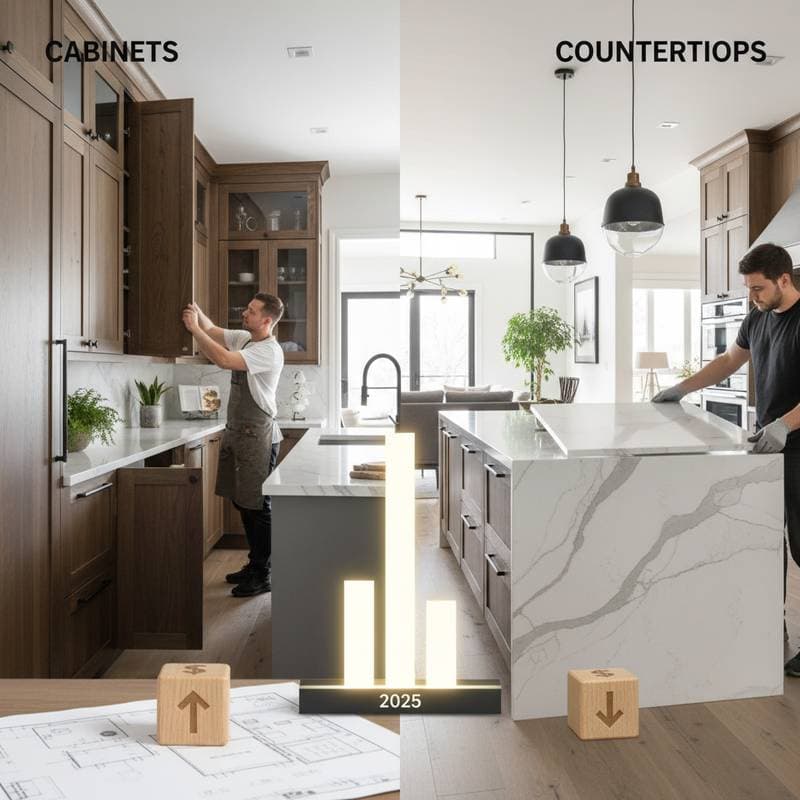
Budget allocation hinges on balancing initial expenses with future returns. Cabinets often yield higher resale value by improving organization and perceived quality. Countertops enhance visual appeal but contribute less to functional upgrades.
The following table outlines average costs, ROI estimates based on national resale data, maintenance requirements, and lifespans for common options.
| Component | Average Cost per Square Foot | Typical ROI | Maintenance Level | Expected Lifespan |
|---|---|---|---|---|
| Cabinet Refacing | $90 to $140 | 65% | Low | 20 years |
| Full Cabinet Replacement | $250 to $500 | 75% | Moderate | 40+ years |
| Laminate Countertop | $25 to $50 | 45% | High | 10 to 15 years |
| Quartz Countertop | $80 to $150 | 65% | Low | 25+ years |
| Granite Countertop | $70 to $120 | 60% | Moderate | 30+ years |
These figures reflect mid-range installations in standard kitchens. ROI percentages indicate recovered costs upon home sale, drawn from industry benchmarks.
Refacing cabinets updates doors and veneers without full demolition, preserving existing structures. Full replacements allow custom configurations, such as soft-close drawers or pull-out shelves, which appeal to buyers seeking modern conveniences.
For countertops, quartz offers non-porous surfaces resistant to stains, ideal for busy households. Granite provides natural elegance but requires annual sealing to prevent absorption.
Maximizing Returns Through Smart Choices
Prioritize cabinets if storage issues dominate your kitchen challenges. Upgrading to durable hardwoods or semi-custom units enhances daily life and attracts premium offers from buyers. Assess current cabinets for salvageable elements; refacing saves up to 50% compared to replacements while delivering 65% ROI.
Countertops shine in visual transformations. Select timeless patterns like neutral quartz to broaden buyer appeal. Avoid trendy colors that may date quickly and reduce resale potential.
Combine upgrades for synergistic effects. Matching cabinet finishes with complementary countertop edges creates cohesive designs that elevate overall perceived value.
Planning Your Renovation
Start with a thorough evaluation of your space. Measure dimensions accurately and note pain points, such as inadequate counter depth or cluttered cabinet interiors.
Consult certified professionals early. Kitchen designers provide 3D renderings to visualize outcomes, while contractors handle permits and sourcing. Budget 10% extra for unforeseen issues, like subfloor repairs during cabinet installations.
Focus on energy-efficient additions, such as LED lighting under cabinets, to further boost ROI. These elements appeal to eco-conscious buyers and qualify for potential rebates.
A strategic approach ensures your kitchen remodel not only meets immediate needs but also secures financial gains for years ahead.