AI Drones Transform Spring Roof Inspections
As warmer weather signals the end of winter, homeowners turn their attention to roof conditions. Harsh elements often damage shingles, flashing, and gutters, resulting in cracks, loose sections, or blocked drains. In the past, inspections required ladders, professional hires, or ground-level observations with binoculars, processes that demanded time and effort. Today, AI-powered drones offer a superior alternative, completing thorough evaluations in minutes without physical hazards.
These tools extend beyond mere convenience. They enable precise maintenance of a home's critical exterior component, fostering long-term durability and peace of mind.
Traditional Roof Inspection Challenges
Prior to drone technology, roof checks combined investigative skills with physical demands. Individuals climbed ladders or engaged roofing teams to assess surfaces. Even seasoned professionals struggled to detect minor issues, such as shadowed lifted shingles or faint cracks.
Homeowners frequently delayed these tasks until visible leaks occurred inside, escalating minor problems into major overhauls. Safety concerns compounded the difficulties; wet surfaces, steep angles, and gusty winds increased fall risks during ascents. Professionals mitigated hazards where possible, but on-site visibility remained limited, and partial photographs provided incomplete insights. Comprehensive roof modeling seemed unattainable without advanced methods.
Key Advantages of AI Drone Inspections
Enhanced Precision Through AI Analysis
AI systems examine captured images at a granular level, scanning pixels to identify anomalies. The drone's software cross-references roof sections with databases of common defects, detecting subtle granule erosion or early algae growth invisible from below. Homeowners benefit from proactive alerts on issues like warping edges or thermal bridging, which prevent widespread deterioration and cut repair expenses by up to 50 percent.
To implement this, select a certified drone service that generates annotated reports. These documents highlight problem areas with measurements and severity ratings, allowing targeted fixes rather than broad assumptions.
Prioritizing Safety in Every Scan
Drones eliminate the need for human access to elevated areas, avoiding ladders and precarious footing. This accessibility suits elderly residents or those averse to heights, while roofing firms lower worker injury rates and associated insurance premiums. Operators control flights from ground level, ensuring compliance with local regulations on airspace and privacy.
For optimal results, verify that the drone operator holds FAA certification and uses collision-avoidance features. Such precautions guarantee secure operations even around obstacles like chimneys or trees.
Accelerating the Inspection Process
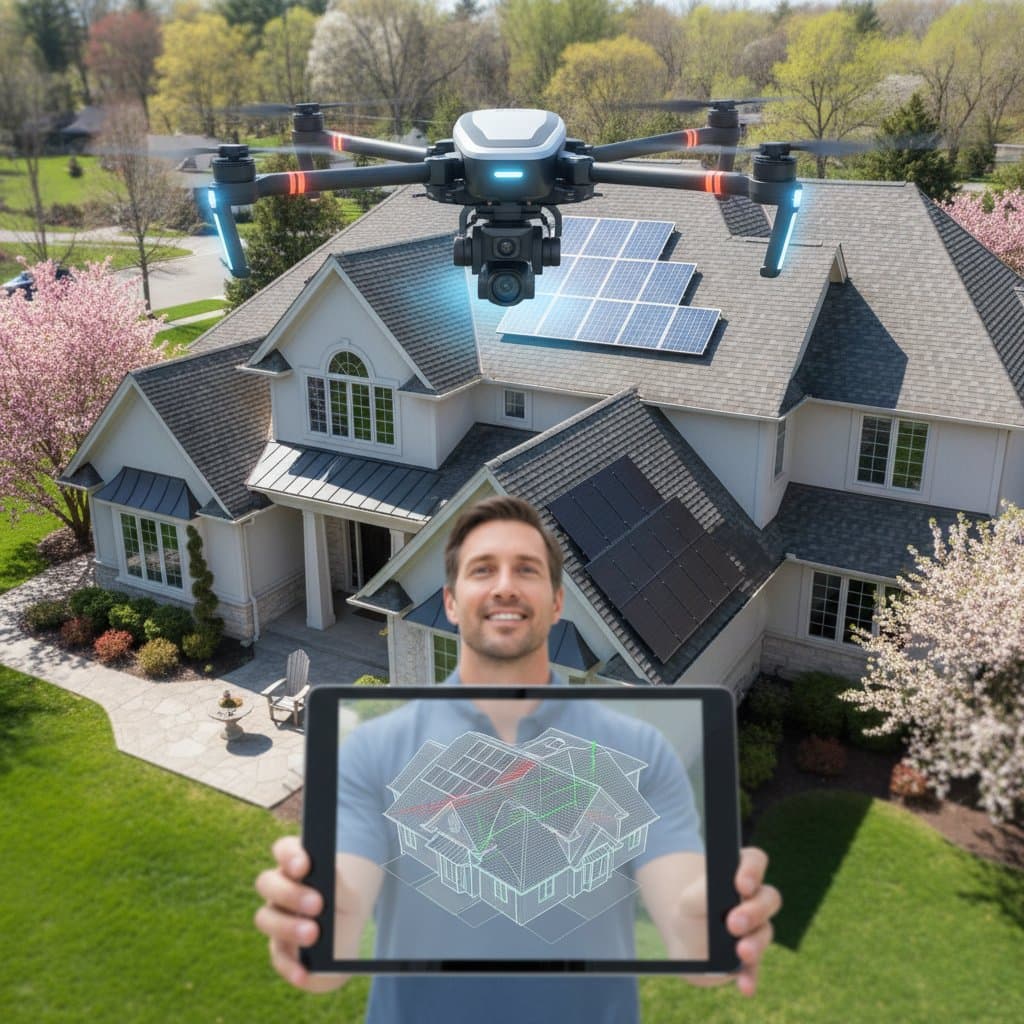
Manual reviews often span two hours or longer, factoring in setup and travel. In contrast, a drone survey concludes in 15 minutes for an average home, followed by AI compilation of a interactive 3D model. Users navigate this digital replica to inspect angles, calculate square footage, or simulate repair scenarios.
This efficiency streamlines workflows: contractors deliver quotes within hours, and homeowners schedule interventions promptly. Integrate drone scans into annual maintenance calendars to align with seasonal demands and avoid peak pricing surges.
Insights for Sustainable Home Upkeep
Beyond structural checks, AI evaluates thermal patterns to pinpoint insulation gaps or ventilation issues, informing energy-saving upgrades. Debris accumulation on surfaces becomes quantifiable, aiding in the design of efficient gutter systems or green roofing additions. Environmentally minded owners leverage these findings to optimize solar installations, potentially boosting efficiency by 20 percent through precise panel alignment.
Consult reports for data-driven decisions, such as selecting reflective coatings to mitigate urban heat islands. This holistic view supports broader sustainability goals without additional site visits.
The Assurance of Technology-Assisted Care
Observing a drone methodically survey the roof evokes a sense of control amid routine upkeep. From the safety of the yard, individuals monitor progress on a mobile device, receiving real-time footage of overlooked spots. The resulting visuals, marked with intuitive color codes for defects, simplify interpretation and reduce uncertainty.
This method shifts maintenance from reactive worry to strategic foresight. Homeowners report greater confidence in their property's integrity, knowing inspections uncover hidden vulnerabilities before they escalate.
Cost-Effective Integration into Home Budgets
Initial perceptions of drone technology as premium overlook its value proposition. Reduced fieldwork and equipment needs lower service fees, often matching or undercutting traditional inspections. Many providers bundle scans with consultations, starting at rates accessible for routine checks.
Over time, investments yield returns through averted disasters; a timely shingle replacement costs far less than water damage remediation. Budget-conscious families can prioritize this tool by comparing quotes from local certified operators, ensuring alignment with financial plans.
Integrating Drone Insights for Lasting Roof Health
Incorporating AI drones into spring protocols elevates roof management from obligation to informed practice. Professionals refine their techniques with detailed data, while owners visualize enhancements like durable underlayments or aesthetic updates. This collaborative dynamic ensures roofs withstand future seasons effectively.
To sustain benefits, review annual reports for trends in wear patterns. Pair these with professional follow-ups to address evolving needs, securing a resilient home exterior for years ahead.