Understanding the 2026 Grab Bar Standards
The 2026 accessibility updates introduce significant changes to bathroom safety features, particularly for grab bars. These rules mandate a minimum load capacity of 300 pounds for all installed grab bars, ensuring they support users under various conditions. This requirement addresses previous vulnerabilities where bars failed under moderate stress, leading to injuries.
Placement guidelines specify heights between 33 and 36 inches from the floor, positioned adjacent to toilets, bathtubs, and showers. Walls must feature reinforced blocking, such as plywood or metal studs, capable of withstanding the 300-pound load without deformation. These standards apply to new constructions, renovations, and retrofits, promoting universal design principles that benefit everyone from young families to seniors.
Compliance involves selecting ADA-approved materials and hiring certified installers. Non-compliance risks fines during inspections or reduced property insurance coverage. Homeowners gain enhanced safety and increased marketability by adhering to these rules early in planning stages.
Key Placement and Installation Guidelines
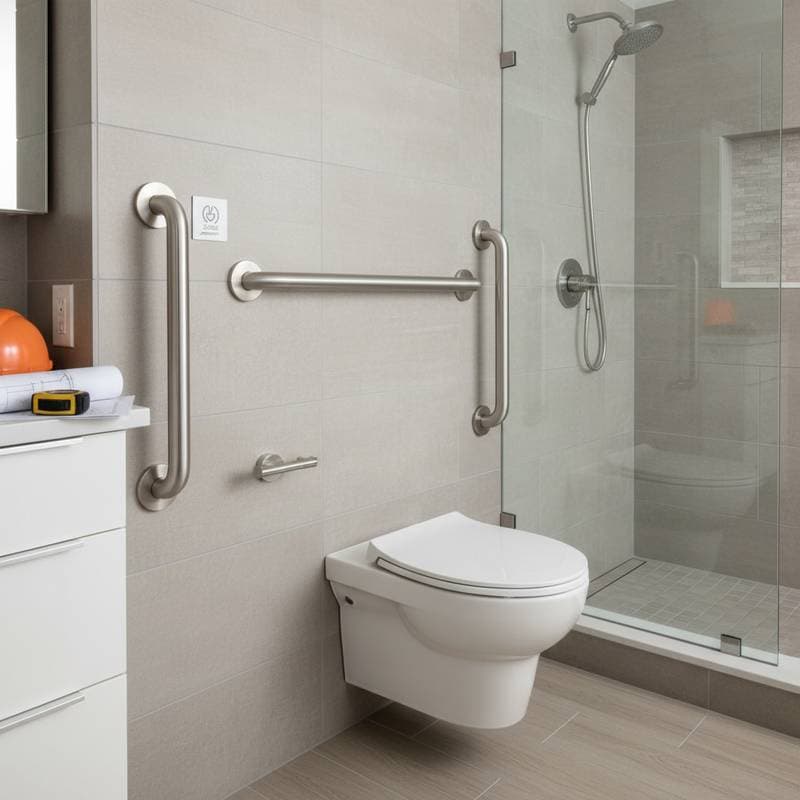
Proper positioning maximizes effectiveness. For toilets, install one horizontal bar on the rear wall, spanning at least 36 inches, and a vertical bar on the side wall at the transfer area. In showers, place bars along the side walls at 38 inches high, with an additional vertical bar near the entry for seated transfers.
Wall preparation remains crucial. Install 3/4-inch plywood backing behind drywall in high-use zones before finishing walls. This reinforcement distributes weight evenly and prevents pull-out failures. Professional assessment ensures studs align with bar mounting points, avoiding costly adjustments later.
Testing verifies durability. After installation, apply gradual pressure to confirm stability. Bars should remain secure without flexing beyond 1/8 inch. These steps align with the 2026 code, fostering environments that support independent living.
Money-Saving and Safety Strategies
Strategic planning lowers expenses while upholding safety protocols.
1. Integrate with Existing Remodels
During bathroom renovations, add reinforcement boards when walls remain exposed. This approach costs approximately $50 per wall section and avoids the premium for accessing finished surfaces, potentially saving hundreds on future grab bar additions.
2. Monitor Seasonal Discounts
Accessibility items frequently see price reductions in fall and winter, as renovation activity declines. Purchasing ahead secures savings of 15 percent or greater, allowing stockpiling for multiple installations.
3. Opt for Versatile Designs
Select grab bars that incorporate towel holders or robe hooks. Such multifunctional units streamline space usage, minimize additional hardware, and maintain a cohesive aesthetic without sacrificing support strength.
4. Explore Incentive Programs
Local governments and nonprofits provide rebates for accessibility enhancements, targeting seniors and veterans. These incentives reimburse up to 25 percent of labor and material expenses, easing financial burdens.
5. Focus on Enhanced Grip Options
Prioritize models featuring textured surfaces and slip-resistant finishes. These elements diminish slip hazards across demographics, prolonging the bars' practical lifespan and reducing replacement needs.
Return on Investment and Enduring Benefits
Investing in compliant grab bars yields tangible financial and personal returns. Properties equipped with verified accessibility elements attract buyers more quickly, often selling 2 to 5 percent faster than non-adapted homes. This broadens appeal to diverse demographics, including multigenerational families.
For those committed to aging in place, these features postpone expensive modifications or medical interventions. Estimates indicate potential savings of thousands in healthcare and adaptation costs over time. Daily risk of falls decreases by up to 50 percent, empowering users with reliable support.
The broader impact extends to family dynamics. Secure bathrooms promote autonomy, alleviating caregiver concerns and enhancing overall household well-being. This investment transcends immediate utility, contributing to long-term resilience.
Steps to Implement Compliance
Begin with a thorough evaluation of your bathroom layout. Identify support needs near fixtures and measure distances for optimal bar placement. Consult building codes or a local inspector to confirm site-specific requirements.
Allocate $200 to $400 per bar for expert installation, factoring in reinforcement if absent. DIY options suit minor retrofits with pre-reinforced walls, but professionals ensure code adherence. Schedule work during off-peak seasons to control costs.
Document installations with photos and receipts for rebate claims or resale documentation. Regular inspections maintain integrity, addressing wear proactively. These actions transform regulatory updates into practical safeguards, securing your home for the future.